Free · five comparisons a day

Size Comparison Game

Compare two shapes, not two numbers

Comparing two things is the part of measurement people are reliably good at. This format is built on that half: one shape held at a known scale, one shape free to resize, and a score for how close the pair came. Five comparisons a day, no tape measure involved.

  • One reference stays fixed for the round
  • 100 points per comparison
  • Full marks within 6% of true size
  • Scored on ratio, so any screen works
01 / 05× 1.42
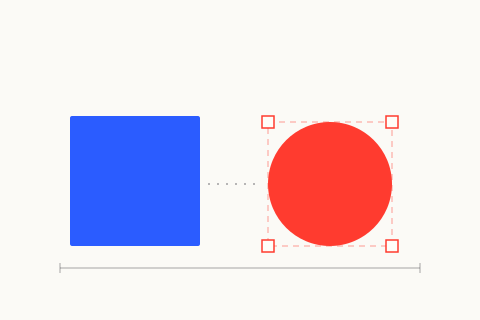
A fixed blue square beside a red circle with corner handles and a dashed measurement line

Nobody knows how tall a door is

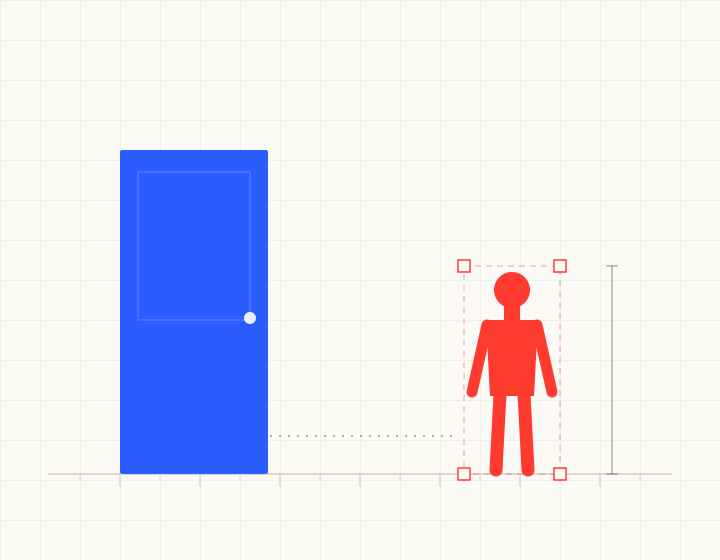
Ask for the height of a door in centimetres and most people stall. Put a person beside it and the same people answer at once.

Comparing is not a shortcut around measuring. It is the measurement most of us actually perform, and it has rules worth knowing before the first round.

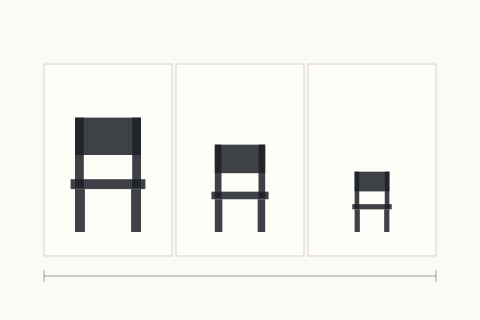
Two outlines side by side at different heights, both measured up from one baseline
FIG. 01
Size Comparison Game@sizeitup

Relative judgement is the steady half

People are consistent at ratios and unreliable at absolutes. Shown two lines, almost anyone can say which is longer and roughly by how much; asked to draw a line of exactly nine centimetres, the same group scatters widely. A comparison puzzle leans entirely on the first skill and never tests the second. Nothing in a round asks you to name a figure, which is why it works on objects you have never held.

Size Comparison Game@sizeitup

The fixed reference carries the round

A comparison needs an anchor, and here the anchor is a blue silhouette locked to a known size. It does not move, scale or vary between rounds. Everything you decide is expressed against it: the target is twice the reference, or a third of it. Take the anchor away and the same round turns into a question about centimetres, which is a harder and much less interesting game.

A board split between a stationary reference and a target waiting to be dragged
FIG. 02
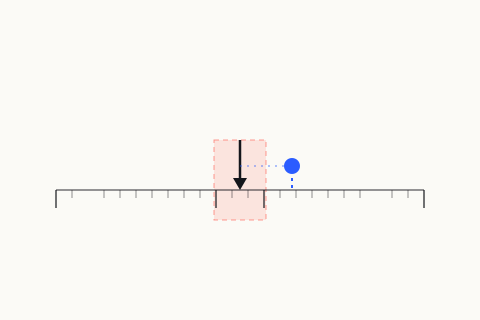
A graduated rule with the scoring window drawn tightly around the true mark
FIG. 03
Size Comparison Game@sizeitup

A percentage tolerance is not a millimetre budget

Full marks sit inside 6% of the true size. On a two-metre door that leaves 12 cm of slack, wide enough for a rough estimate to survive. On a 30 cm object the same 6% is under 2 cm, and the margin has to be judged by eye against a shape that is already small. This is why tall objects feel kinder than short ones in the same set, and why a low total does not always mean a poor eye.

Size Comparison Game@sizeitup

The rule travels, the knowledge does not

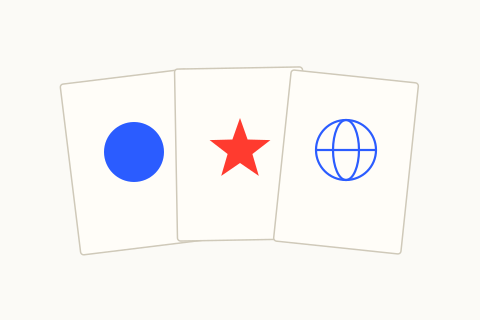
The same mechanic covers furniture, film props and coastlines, and the difficulty moves with the subject rather than the rule. Everyday objects are anchored in your own kitchen and body. Fictional props are only as good as your memory of the source, so a fan carries an advantage that has nothing to do with estimating. Geography shifts the scale by several orders of magnitude, where a country can end up smaller than a city you know well.

Three cards overlapping at an angle, holding an object, a figure and a landmass
FIG. 04
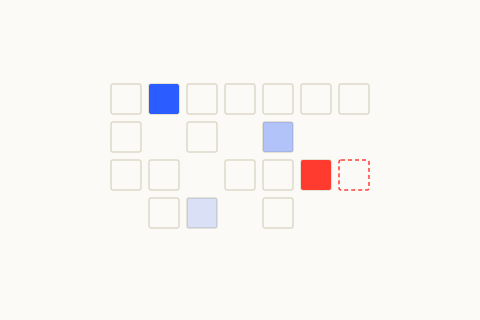
A week of dated tiles with a handful of sessions marked and gaps left between them
FIG. 05
Size Comparison Game@sizeitup

Five is about where attention gives out

A set stops at five comparisons, and not because five is a round number. Precision drops once you have been staring at silhouettes for a few minutes; the tenth comparison starts being answered by fatigue instead of judgement. Short sets also keep the habit cheap, since two minutes is easy to repeat and twenty is not. The trade is that one careless round costs a fifth of the day, which is what the practice mode is for.

02

What the comparison mechanic gives you

Properties of the format rather than a list of buttons.

01

An anchor that never shifts

The blue shape is pinned for the whole round. Your answer is always phrased against it, so the task stays a comparison instead of drifting into recall.

02

Error measured as a ratio

Points follow the proportional gap between your shape and the true one. Pixels, zoom level and monitor size cancel out of the calculation.

03

Free scaling in both directions

The target grows or shrinks with one gesture, without snap points or a shortlist of plausible answers. Halving and doubling are each a single move.

04

The true edge laid over yours

Revealing draws the real outline on top of your guess. One look tells you whether you overshot and by how much of the reference.

05

Subject decks, unchanged rule

Objects, fiction and landmasses each keep their own daily set. Only the things being compared change; the fixed-plus-resizable layout stays identical.

06

The same ratio on a phone

Because scoring is relative, a small screen does not narrow your margin. A round on a phone is exactly as hard as that round on a desktop.

03

How to compare well

Four habits that separate a 400 day from a 250 day.

  1. 01

    Name the reference out loud

    Say the true size before touching anything: a door is two metres, a mug is ten centimetres. A named anchor holds far steadier than a felt sense.

  2. 02

    Convert it to a fraction

    Decide whether the target looks like half, a third or twice the reference. Fractions survive a change of object; centimetres do not.

  3. 03

    Halve first, then trim

    Get the pair near your fraction with one large drag, then correct in smaller steps. Overshooting in a single jump is the common way to lose a round.

  4. 04

    Commit at the smallest visible error

    Lock in once further dragging stops improving the match. Anything inside 6% pays the same, so chasing the last pixel buys nothing.

04

What players get wrong first

Three confessions from people who kept playing.

I overshoot anything small. Under twenty centimetres and my hand drags it to double size, every time.
JWJonas W.Product designer
We do one round as a warm-up: name the reference together, guess the ratio, then look at the overlay.
KAKeiko A.Primary school teacher
Africa looks manageable until you drag it over Europe. Past a thousand kilometres my sense of ratio just quits.
RMRuben M.Geography deck regular

05

Questions about the format

What the mechanic is, how it is scored, and where it stops being a fair test.

One reference, one shape to move

Drag until the pair looks right, then see the true outline laid over your guess. The full set takes about two minutes.

Start comparing